Regenerative medicine expert Timi Ellina reflects on how “the mother of DNA” has inspired women in STEM.
February 11 marks the International Day of Women and Girls in Science, a day set aside by the United Nations to celebrate what women and girls have achieved in science and to remind the world that science and gender equality must advance together.
It is a chance to honour those who have shaped our understanding of the world and to encourage the next generation of girls to see themselves in science.
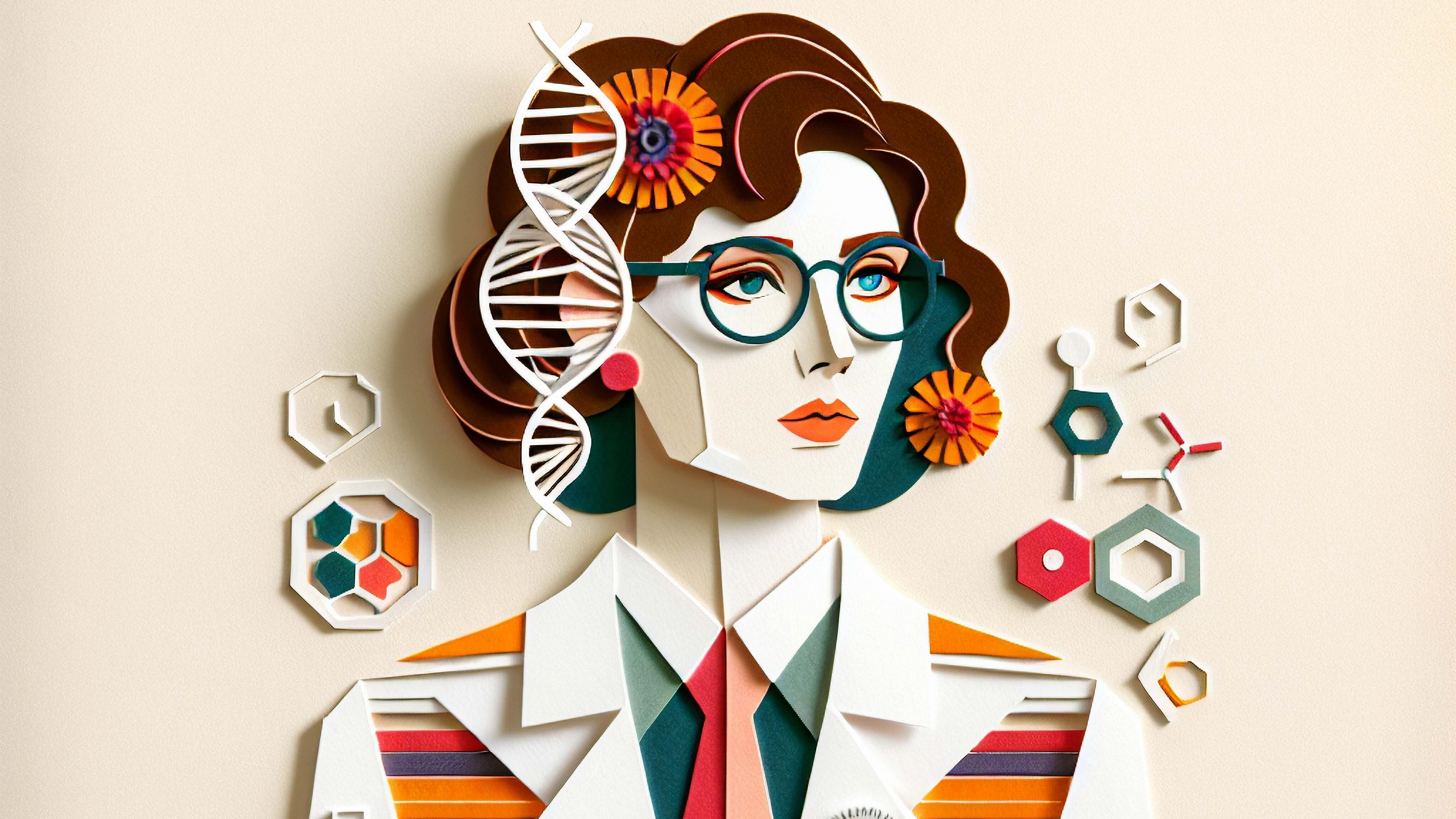
Rosalind Franklin, "the mother of DNA"
When I first came across the story of Rosalind Elsie Franklin as a teenager, she was one of the few female scientists I could find in the textbooks.
Nicknamed “the mother of DNA”, her work was central to revealing the structure of the molecule that underlies all life. Her X-ray diffraction image, known as Photo 51, was the decisive evidence that made the double helix visible to the world, yet for many years her name was not recognised as it should have been.
Franklin’s life and career made a deep impression on me. She studied at Cambridge, completed her PhD and became a brilliant crystallographer in Paris before returning to King’s College London to work on DNA.
She faced hostility in a male-dominated environment, and her achievements were overshadowed when colleagues used her data without her permission. Her paper was published, but towards the end of a journal that also featured her male colleagues, and it was long after her death from cancer at 37 that her contribution became widely understood.
Her story still resonates today because it shows what can happen when talent is ignored.
This is exactly why we mark the International Day of Women and Girls in Science. We know from global data that women make up less than a third of researchers worldwide, and that inequality persists at every stage of a scientific career. That is not just unfair; it holds back science itself.
Navigating a male dominated field
When I went on to study Molecular Biophysics at King’s College London, in the same department where she made her discoveries, Franklin’s example became personal. It was a dream come true, but I was the only woman in my course and, in my first roles in the sector, I faced bias that made me doubt myself.
Despite strong scientific qualifications and a peer-reviewed publication early in my career, I found myself steered away from technical roles and into sales. Men with fewer credentials were promoted above me. My work was sometimes credited to others.
Experiences like this are not exceptions. They are part of the very patterns the International Day of Women and Girls in Science highlights.
Women and girls still face barriers in education, research funding, senior leadership and recognition in science, technology, engineering and mathematics (STEM) subjects.
The day aims to raise awareness of these issues and to show that inclusion improves science for everyone.
As part of Franklin’s centenary celebrations in 2020, I brought together people from across science to raise awareness, funding, and opportunities for women in science through ‘The Meeting of Minds’, with King’s College as a beneficiary, with the aim of making sure that women do not have to fight for the right to be in the room. Six years later, this cause is still close to my heart.
Franklin taught me that scientific courage is about insisting that your work is recognised, as well as making discoveries.
On this International Day of Women and Girls in Science, I would like to honour her memory and reaffirm that science needs the full participation of women and girls to solve the great challenges of our time. When women and girls are fully included in science, we all benefit.
Timi Ellina
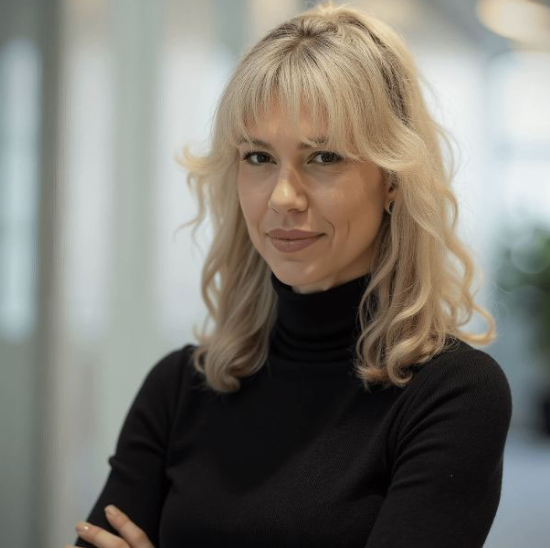
Timi Ellina is the chief executive of Helene Therapeutics and a leading expert in regenerative medicine and a PhD candidate at the Randall Centre for Cell & Molecular Biophysics. She has co-founded multiple ventures, including Stemsync Solutions, focused on translating cutting-edge research into clinical applications.
You might also like to read... Women in aesthetic technology