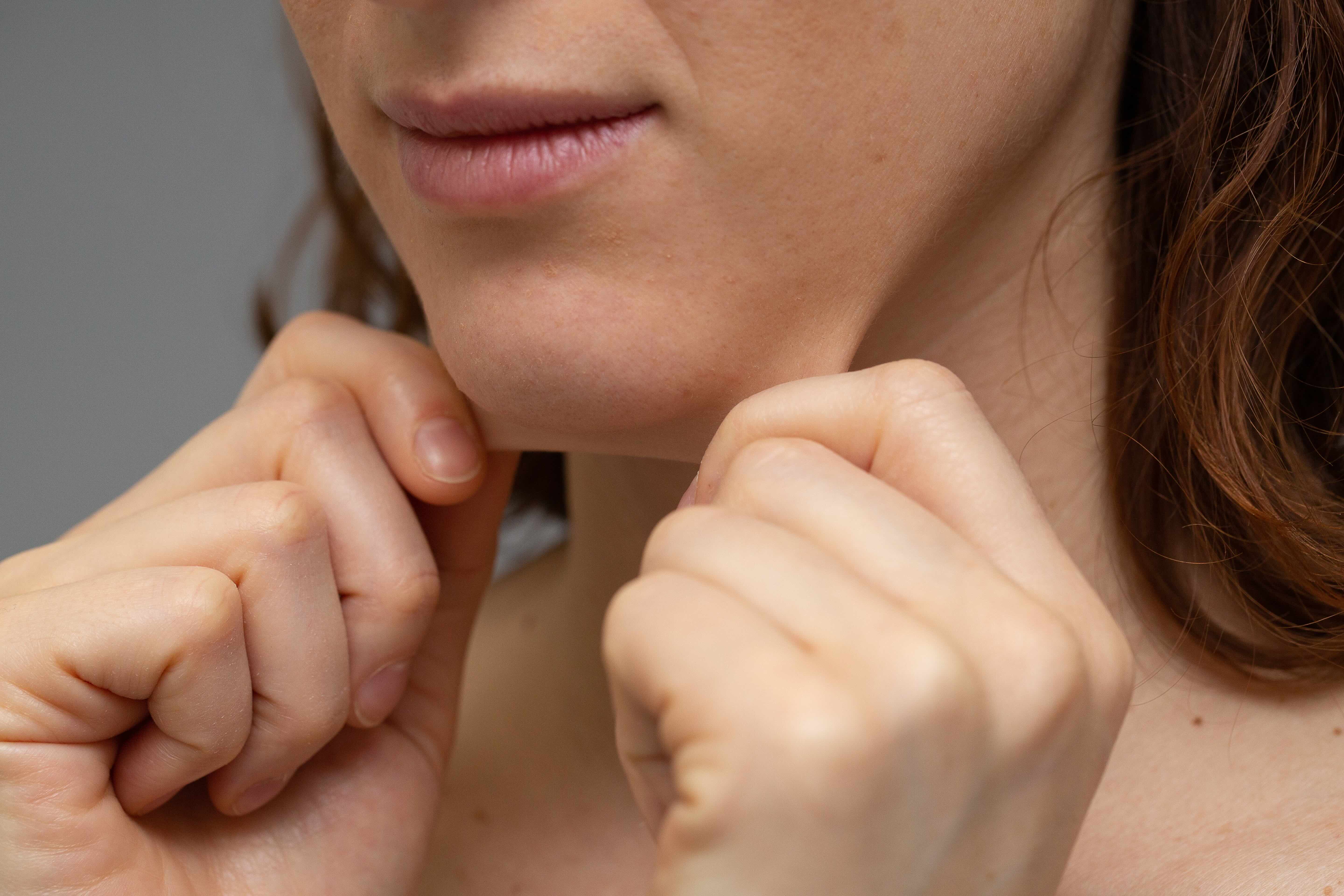
Dr Ana Mansouri explores topical intervention with the SkinCeuticals A.G.E. regimen in a case study series of four patients undergoing medication-driven weight loss.
The clinical challenge
The aesthetic consultation is evolving. Increasingly, clinicians are seeing patients undergoing rapid, medication-driven weight loss who present not only with reduced volume, but with compromised skin quality, laxity and a loss of dermal resilience.
This phenomenon is particularly evident in medication-driven weight loss (mdWL), typically defined as a ≥5–20% reduction in BMI occurring over a three to six-month period.
While the metabolic and systemic benefits of mdWL are well recognised, the aesthetic sequelae of skin laxity, dullness and accelerated ageing pose a growing challenge.
These patients are often highly informed and actively seek science-led, evidence-based solutions that address skin quality, not simply volume replacement.
From a biological perspective, rapid weight loss disproportionately affects the skin and both superficial and deep fat compartments.
Reduced mechanical support unmasks dermal laxity, while increased glycation, a non-enzymatic process in which sugars bind to collagen and elastin, further compromises tensile strength and elasticity.
In this context, energy-based devices such as high-intensity focused ultrasound (HIFU) and next-generation SUPERB ultrasound technologies, including Sofwave, play a key role.
By delivering targeted thermal stimulation to the mid-dermis, these modalities activate fibroblasts and initiate neocollagenesis, directly addressing the structural changes seen in mdWL patients.
The integrated protocol
However, device-based treatments alone may not fully correct the biochemical drivers of skin ageing associated with weight loss. This is where topical intervention becomes clinically meaningful.
In a case study series conducted in my practice, the SkinCeuticals A.G.E. regimen was chosen specifically to combat glycation; combining A.G.E. Interrupter Ultra Serum with A.G.E.
Interrupter Advanced Cream, was integrated into a staged treatment protocol. Four patients (two sibling pairs) undergoing mdWL for over six months, with baseline weight loss ranging from 7–24% of their BMI, presented with reduced firmness, radiance and confidence.
Phase 1 consisted of six weeks of twice-daily A.G.E. regimen applied to the face and neck as monotherapy, designed to prepare the skin prior to energy-based intervention.
Phase 2 combined ongoing topical use with a full-face and neck Sofwave ultrasound treatment.
Results
Objective outcomes were compelling. Following six weeks of A.G.E. monotherapy, patients demonstrated an average reduction of -two years in true skin age as measured by the Canfield VISIA system.
At eight weeks post-ultrasound integration, this improvement increased to an average reduction of -4.5 years compared to baseline.
Clinically, improvements were observed across firmness, tissue adherence, and lifting vectors supported by Canfield H2 Vectra volumetric analysis. A volumetric increase of +1.14ml was observed across the mid face with a -2.48ml volumetric reduction in the lower face.
This volume redistribution is considered beneficial, particularly in view of counteracting the bottom heaviness that can typically occur with the ageing process. The results demonstrate a positive clinical outcome.
Importantly, psychological wellbeing scores, measured using FACE-Q, improved consistently across all participants; an often overlooked but critical outcome in this patient cohort.
In practice, this integrated approach allows clinicians to position themselves at the forefront of the rapidly expanding weight-loss aesthetics market.
Early intervention during active weight loss, combining the SkinCeuticals A.G.E. regimen with collagen induction technologies such as ultrasound or biostimulatory injectables, followed by maintenance during weight stabilisation, offers a scientifically robust and commercially differentiating pathway.
As mdWL becomes increasingly prevalent, protocols that address structural and biochemical ageing will define the next era of aesthetic medicine.
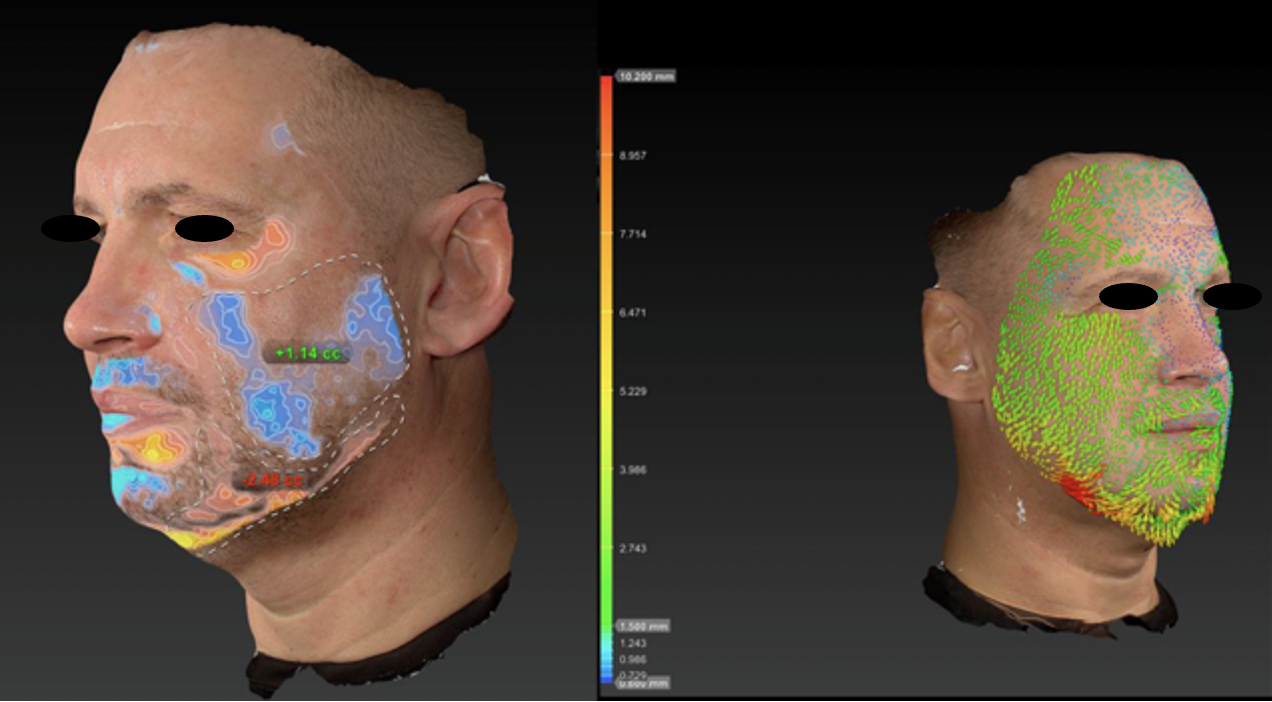
H2 Vectra volumetric analysis
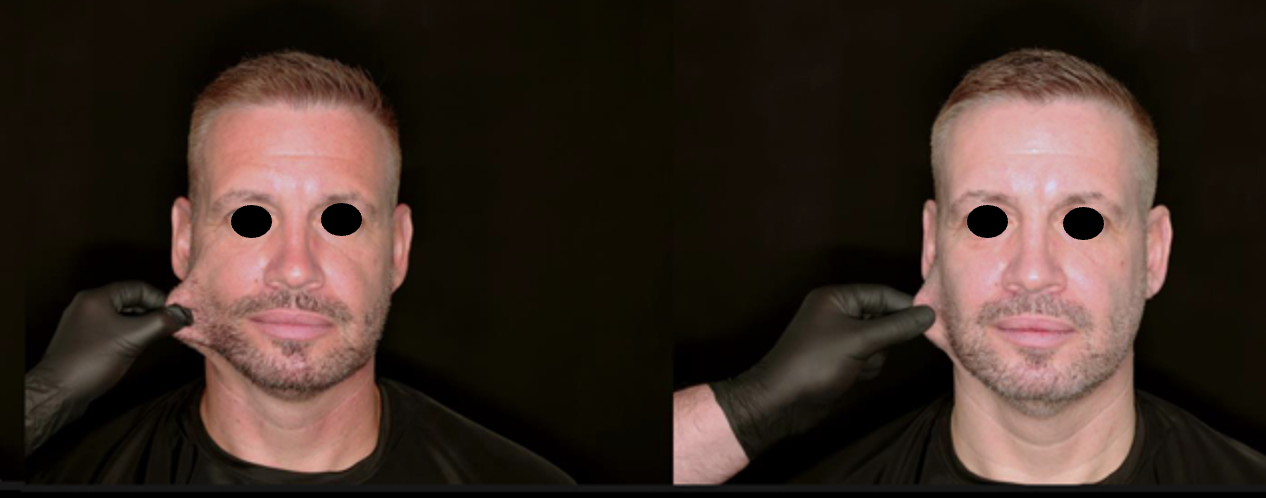
Pinch Test Assessment: Clinical assessment of skin snap-back. Baseline vs result at 14 weeks.
This article is in collaboration with SkinCeuticals
Dr Ana Mansouri

Dr Ana Mansouri is an aesthetic doctor, trainer and the medical director of Dr Ana The Skin Clinic in Birmingham.
Dr Mansouri is a renowned cosmetic practitioner in the UK and is regularly featured in the press as a skin and cosmetic expert providing advice to the public on various skin health topics.