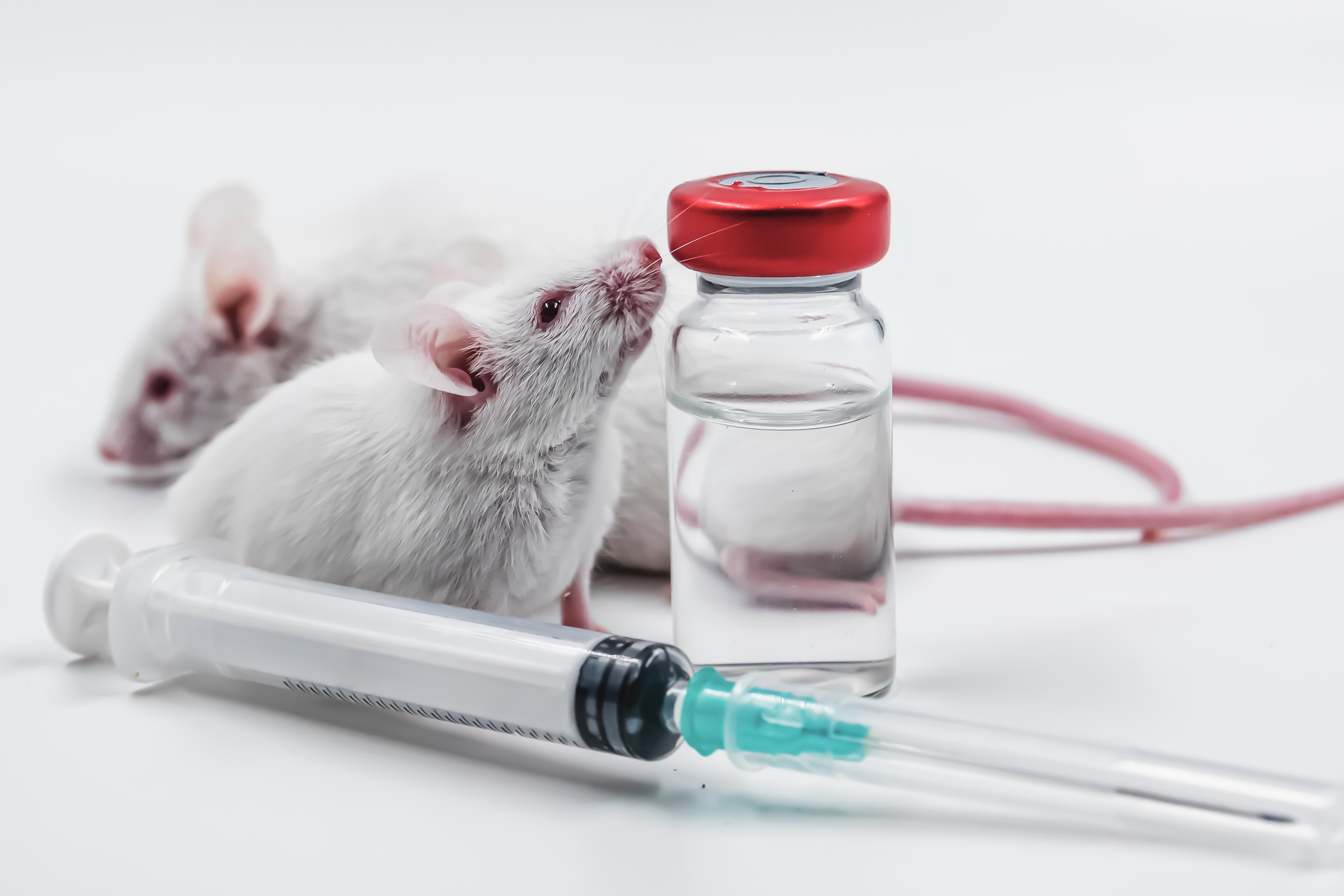
The European Directorate for the Quality of Medicines & HealthCare (EDQM) has reactivated its Botulinum Toxin Working Party (BOT WP), planning the gradual phasing out of the mouse lethal dose 50% (mLD50) assay from the current European Pharmacopoeia monographs for botulinum toxin.
The latest figures released by the European Commission show that there were 164,802 mice used for batch potency testing of human medicines in the EU in 2023, highlighting the scale of animal use in pharmaceutical testing.
This recent move receives support from European regulatory authorities and manufacturers for transitioning away from the use of the mLD50 assay.
What is the LD50 test in botulinum toxin tests?
The LD50 assay is a laboratory test historically used to measure the potency of botulinum toxin.
LD50 stands for lethal dose, 50%. In the traditional mouse LD50 test, different doses of botulinum toxin are administered to groups of mice to determine the dose at which approximately 50% of the animals die. The resulting measurement is used to estimate the biological potency of the toxin.
Botulinum toxin monographs are official standards or specifications describing the identity, quality, strength, and testing requirements for a particular botulinum toxin product. Historically, some monographs have referenced mouse-based potency assays as part of how toxin activity is measured.
LD50 is not a measure of how much toxin is used clinically in a patient. It is a laboratory measure of biological potency.
The traditional mouse assay has increasingly been questioned because of its animal-welfare implications and limitations in directly reflecting clinical activity.
What is the Botulinum Toxin Working Party (BOT WP)?
The Botulinum Toxin Working Party (BOT WP) is the group tasked with creating a roadmap to
phase out mouse lethal dose (mLD50) animal testing for botulinum toxin monographs.
Before the end of October 2026, eligible practitioners can apply to contribute to shaping the future pharmacopoeial framework for botulinum toxin products.
What is the alternative to the LD50 assay in botulinum toxin tests?
According to Cruelty Free Europe (CFE), major toxin manufacturers have already developed a cell-based test to replace the batch test for their toxin products.
CFE is a Brussels-based network of animal protection groups working to bring animal testing to an end across Europe.
‘We welcome the news that the European Directorate for the Quality of Medicines and HealthCare has taken this step towards the phase-out of the mouse LD50 test for botulinum toxin testing,” shares Emma Grange, CFE’s director of science and regulatory affairs.
“A cell-based alternative to the mouse test has been available for many years, and we have campaigned against the continued use of animals to test botulinum toxin products – this test features in our Replace Animal Test (RAT) list, which was developed over a decade ago to highlight tests which already have available non-animal replacements.”
The move comes amid a wider shift away from animal testing; in November, the UK Strategy set out a five-year plan to accelerate the development, validation and adoption of alternatives to animal testing.
Practitioners can assess eligibility and check out the EDQM’s general “Join the Network” page before the end of October 2026 to find out how to apply as an expert.
FAQ’s
What is the mouse LD50 test?
The mouse LD50 test is a laboratory assay historically used to measure the biological potency of botulinum toxin. Different doses of the toxin are administered to groups of mice to establish the dose that causes death in approximately 50% of the animals. The resulting measurement is used to assess the potency of a botulinum toxin product.
What does LD50 mean?
LD50 stands for “lethal dose, 50%”. In toxicology, it refers to the dose of a substance estimated to cause death in 50% of a test population under defined experimental conditions. In botulinum toxin testing, the mouse LD50 assay has historically been used as a measure of biological potency.
Why is mouse LD50 testing used for botulinum toxin?
The mouse LD50 assay has historically been used to determine the biological potency of botulinum toxin products and has been referenced in pharmacopoeial testing requirements. However, the assay has increasingly been questioned because of animal-welfare concerns and limitations associated with using an animal model to measure product potency.
Is there an alternative to the mouse LD50 test?
Yes. Non-animal alternatives, including cell-based assays, have been developed for botulinum toxin potency testing. These methods aim to measure the biological activity of botulinum toxin without using animals. Their use and acceptance depend on factors including validation, regulatory requirements, and the specific product being tested.
What is a cell-based botulinum toxin assay?
A cell-based botulinum toxin assay uses cultured cells to measure the biological activity of botulinum toxin rather than relying on live animals. These assays can assess how the toxin interacts with cellular pathways involved in its mechanism of action and are being used as alternatives to animal-based potency testing for some botulinum toxin products.
What is the EDQM Botulinum Toxin Working Party?
The Botulinum Toxin Working Party (BOT WP) is a specialist group reactivated by the European Directorate for the Quality of Medicines & HealthCare (EDQM). It is tasked with developing a roadmap for the gradual phase-out of the mouse lethal dose 50% (mLD50) assay from European Pharmacopoeia monographs for botulinum toxin products.
The group is also intended to bring together relevant expertise as the pharmacopoeial framework for botulinum toxin testing develops. Eligible experts can apply through the EDQM's network before the end of October 2026.