As we approach National Vitamin C Day on April 4, there is no better time to reflect on the evolution of antioxidant science in aesthetic medicine and vitamin C skincare in aesthetic treatments.
Vitamin C remains one of the most studied antioxidants in skincare, widely used to protect against environmental damage and support healthy skin.
For more than 40 years, SkinCeuticals has led research into topical antioxidants, pioneering vitamin C formulations designed to protect the skin from oxidative stress while supporting collagen synthesis and treatment of dyspigmentation.
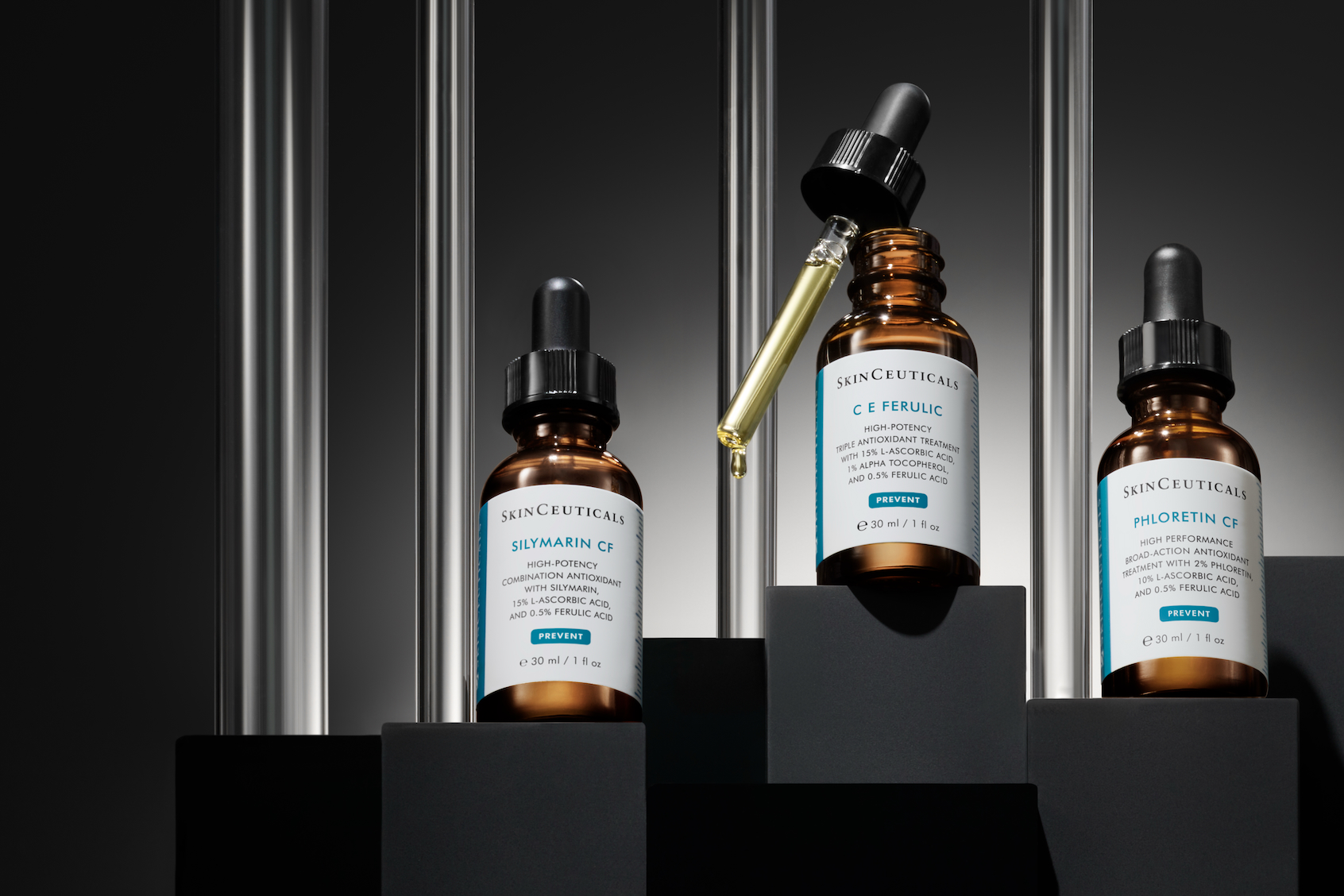
Today, vitamin C serums such as C E Ferulic, Phloretin CF and Silymarin CF play an important role in modern integrated skincare strategies within aesthetic practice.
The science of vitamin C in skincare
Not all vitamin C formulations are created equal. In the 1990s, Dr Sheldon Pinnell established the Duke parameters, demonstrating that effective topical vitamin C requires pure L-ascorbic acid at concentrations between 10–20% and a pH of 3.5 or lower to enable penetration through the stratum corneum1.
When delivered in this form, vitamin C neutralises reactive oxygen species generated by ultraviolet radiation, pollution and infrared exposure2. It also reduces matrix metalloproteinase activity, limiting collagen degradation, while acting as a cofactor for lysyl and prolyl hydroxylase to stabilise collagen fibres and promote transcription pathways involved in collagen biosynthesis2.
Tailored antioxidant skincare solutions
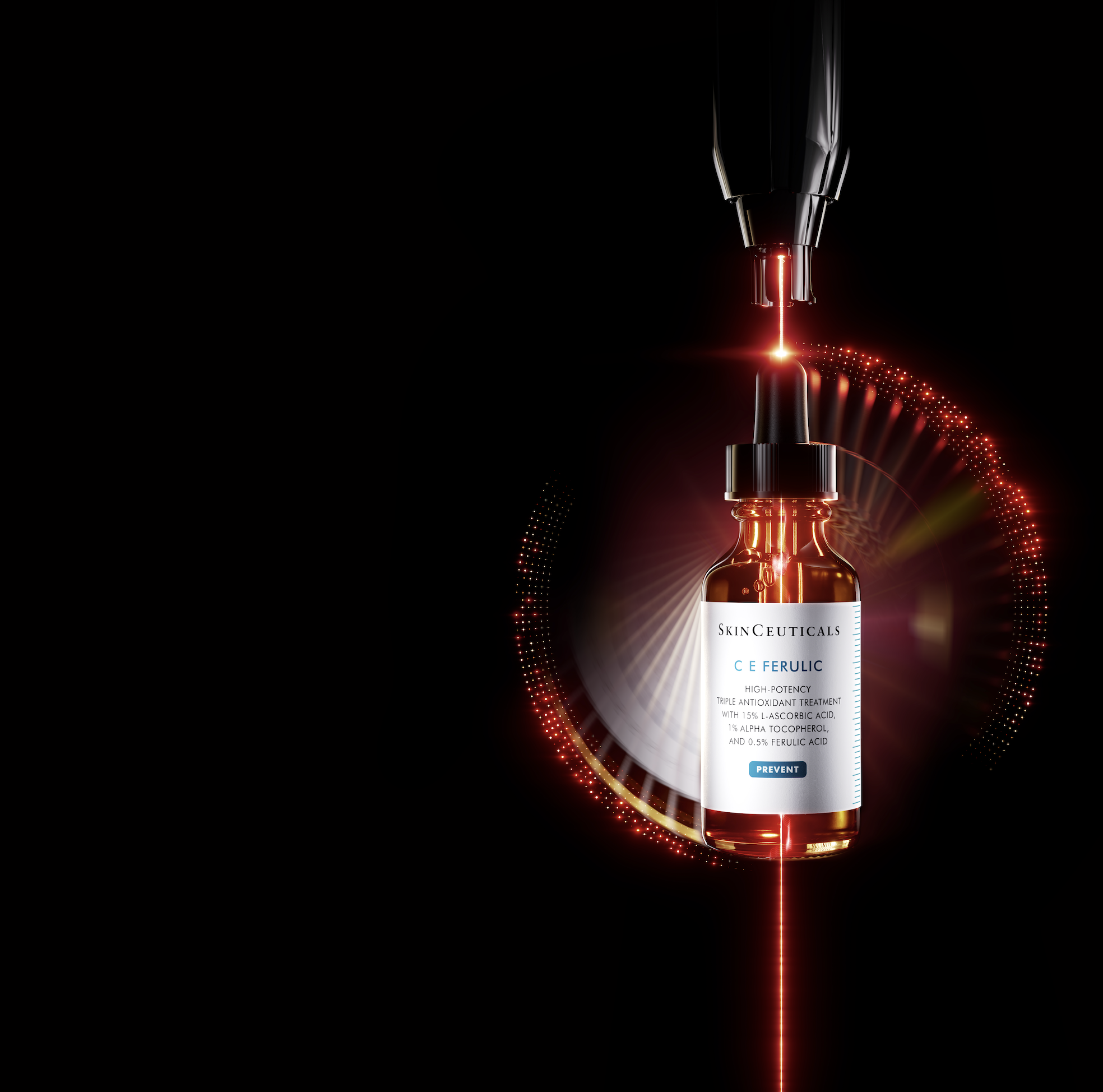
SkinCeuticals C E Ferulic remains one of the most extensively studied topical antioxidant formulations and is widely regarded as the gold-standard for people with normal to dry skin and signs of photoageing.
The serum combines 15% L-ascorbic acid with 1% α-tocopherol and 0.5% ferulic acid, creating a synergistic antioxidant system. Ferulic acid stabilises vitamins C and E while enhancing their activity, whilst α-tocopherol protects cell membranes within the lipid phase of the skin2. Together this combination has been shown to provide up to eight-fold greater protection against UV-induced oxidative damage3.
Clinical studies also demonstrate increased collagen production, improvements in skin firmness and a reduction in the appearance of fine lines and wrinkles.
For patients with specific skin concerns, SkinCeuticals offers targeted antioxidant formulations.
Phloretin CF is designed for people with normal to oily skin and pigmentary concerns, helping address hyperpigmentation while protecting against environmental free radicals,5.
Silymarin CF is formulated for oily and blemish-prone skin and contains silymarin, an antioxidant that helps prevent oil oxidation, a key contributor to inflammatory acne. Supporting these benefits, sebumeter testing showed a 16% reduction in oiliness as early as week 14.
Integrating Vitamin C into aesthetic procedures
Topical antioxidants play an important role in optimising outcomes from aesthetic procedures.
C E Ferulic can enhance results when integrated into clinical treatment protocols. When combined with a Q-switched Nd:YAG laser in the treatment of solar lentigines, C E Ferulic demonstrated greater reduction in melanin index compared to the control6. In addition, application following fractional ablative laser resurfacing has been shown to reduce post-treatment erythema and oedema whilst shortening patient recovery by two days7.
Integrating antioxidants into protocols for lasers and microneedling significantly improves treatment outcomes; a split-neck clinical study showed that post-treatment C E Ferulic application led to a 29.9% reduction (vs. 18.0%; p < 0.001) in wrinkle severity and a 12.9% (vs. 2.3%; p < 0.001) increase in elasticity by week 12 compared to control8.
Conclusion
As aesthetic medicine continues to evolve, integrated skincare is becoming increasingly important for optimising patient outcomes. Evidence-based antioxidants like the SkinCeuticals vitamin C serums not only protect the skin from oxidative stress but also enhance and support the results of in-clinic procedures.
View SkinCeuticals Full List of Publications here
Dr Derek Phillips

Dr Derrick Phillips is a Consultant Dermatologist based in London with clinical interests in general dermatology, lesion assessment, energy-based treatments and skin rejuvenation. He is a spokesperson for the British Skin Foundation, and a member of the Aesthetics Journal Review Panel.
References
1. Pinnell SR, Madey DL. Topical vitamin C in skin care. Aesthet Surg J. 1998 Nov-Dec;18(6):468-70.
2. Al-Niaimi F, Chiang NYZ. Topical Vitamin C and the Skin: Mechanisms of Action and Clinical Applications. J Clin Aesthet Dermatol. 2017 Jul;10(7):14-17.
3. Lin FH et al. Ferulic acid stabilizes a solution of vitamins C and E and doubles its photoprotection of skin. J Invest Dermatol. 2005 Oct;125(4):826-32.
4. Draelos ZD, Kerscher M, Lynch S, White S, Choudhary H. A Silymarin Antioxidant Serum Improves Facial Acne Alone and as Part of a Treatment Regimen. J Drugs Dermatol. 2024 Apr 1;23(4):233-238.
5. Oresajo C et al. Protective effects of a topical antioxidant mixture containing vitamin C, ferulic acid, and phloretin against ultraviolet-induced photodamage in human skin. J Cosmet Dermatol. 2008 Dec;7(4):290-7.
6. Kim J et al. Effect of a topical antioxidant serum containing vitamin C, vitamin E, and ferulic acid after Q-switched 1064-nm Nd:YAG laser for treatment of environment-induced skin pigmentation. J Cosmet Dermatol. 2020 Oct;19(10):2576-2582.
7. Waibel JS et al. Laser-assisted delivery of vitamin C, vitamin E, and ferulic acid formula serum decreases fractional laser postoperative recovery by increased beta fibroblast growth factor expression. Lasers Surg Med. 2016 Mar;48(3):238-44.
8. Kim J, Lee SG, Boo J, Kim H, Hwang S, Liu C, Yan X, Brieva P, Kim J. Fractional microneedle radiofrequency with the application of vitamin C, E, and ferulic acid serum for neck skin rejuvenation: a prospective, double-blinded, split-neck, placebo-controlled trial. J Dermatolog Treat. 2025 Dec;36(1):2504655
square.JPG)