Everyone supports high standards, until they become inconvenient. Amy Bird examines why standards without enforcement are simply suggestions.
The aesthetic medicine sector loves talking about standards. We talk about raising them. We talk about protecting them. We talk about regulation, patient safety, professionalism, governance, ethics, education and credibility. Yet I find myself asking an increasingly uncomfortable question: If standards matter so much, why are we so reluctant to enforce them?
Because standards without accountability are nothing more than suggestions. As healthcare professionals, we are bound by professional codes of conduct, ethical frameworks, regulatory expectations and legal responsibilities. We are expected to act with integrity, prioritise patient safety, maintain professional boundaries and uphold public trust. These expectations are not optional. Nor should they be. Yet the wheels fall off as we enter ‘aesthetics’.
The privilege of caring for patients carries responsibilities that extend far beyond technical competence. Yet within aesthetic medicine, there often appears to be a disconnect between the standards we publicly champion and the behaviours we are prepared to tolerate.
Accountability gap
Recent reports of botulism-related complications have once again brought patient safety into sharp focus. Whilst investigations will determine the specific circumstances surrounding individual cases, these incidents have reignited longstanding concerns around governance, oversight, prescribing practices, accountability and professional responsibility.
For years, many have warned that weaknesses within the system create opportunities for poor practice to flourish. The question is no longer whether those concerns exist. The question is what we are prepared to do about them. We cannot continue to call for professional recognition whilst turning a blind eye to practices that undermine public confidence.
The difference between status and substance
The reality is that accountability begins long before regulation arrives. It begins with us. One of the most concerning trends within our profession is our tendency to celebrate visibility whilst overlooking substance.
We have become remarkably skilled at rewarding profile. Conference stages. Ambassador roles. Industry partnerships. Key Opinion Leader titles. Social media influence. Followers. I could go on, but visibility is not inherently problematic; visibility is not credibility. Nor is it evidence of professional excellence. Somewhere along the way, parts of our profession have become distracted by status whilst neglecting substance.
The pursuit of recognition appears, at times, to have become more important than the pursuit of knowledge. Too often, conversations begin not with questions about patient outcomes, education, research or standards, but with: “Can I speak on your stage?” “Will I be a KOL?” “What’s the fee?” “What do I get in return?”
There is absolutely a place for recognising expertise and compensating individuals who bring genuine value to education and professional development. Still, there is a significant difference between being rewarded for contribution and expecting reward as a condition of contribution. Healthcare leadership is not built on entitlement. It is built on service.
The most credible professionals are rarely those chasing titles. They are the ones quietly pursuing postgraduate education, contributing to research, mentoring others, strengthening governance, improving patient safety and advancing standards when there is little personal recognition attached to doing so. On or off the stage, socials or at an event.
Attendance is not advancement
Which brings me to another uncomfortable truth. CPD is not the pinnacle of professional development. It is the baseline. Across healthcare, professionals seeking to advance their practice pursue postgraduate certificates, diplomas, master’s degrees, research programmes, leadership qualifications and specialist training. They develop expertise beyond competency, they challenge evidence, they contribute to it.
Yet in aesthetic medicine, we have become surprisingly comfortable confusing attendance with advancement. Collecting certificates is not the same as developing expertise. Attending educational events is not the same as academic progression. If we genuinely want to be recognised as a healthcare specialty, then we must be prepared to embrace the educational standards expected within healthcare. Because, plot twist, practitioners are not the only ones who need to reflect; industry has a responsibility too. Manufacturers, distributors, conference organisers, ‘educators’ and professional associations. All have influence over the culture we create and the behaviours we reward.
Rewarding true standards
Every podium offered, every ambassador appointed, every educational partnership awarded, every individual elevated as a representative of the profession sends a message about the standards we value.
So here is the question the industry must answer: Are we prepared to continue rewarding individuals whose behaviour falls short of the professional standards that healthcare professionals are legally and ethically required to uphold? Or do standards suddenly become negotiable when influence, revenue, visibility or commercial interests are involved?
If an individual repeatedly demonstrates conduct that undermines professionalism, patient trust, or the values we claim to represent, are we willing to act? Or do we let it slide because they have followers? Because they generate engagement? Because they sell products? Because they fill conference seats? If standards only apply to some people, then they are not standards at all. They are preferences.
Evolving regulation
The aesthetic sector currently stands at a critical moment; regulation is evolving, public scrutiny is increasing, patients are becoming more informed, policymakers are paying closer attention. This is not the time for selective accountability; this is the time for collective responsibility.
Industry, educators, professional bodies and clinicians must get on the same page, not simply by talking about standards, but by applying them consistently, fairly, courageously. Because credibility is not built by the standards we write, it is built by the standards we are willing to uphold. Ultimately, the future of aesthetic medicine will not be determined by who has the biggest platform, the loudest voice, or the most impressive title.
It will be determined by whether we have the courage to hold ourselves and each other to the standards we so often claim to value. Because standards without accountability are just suggestions.
Amy Bird
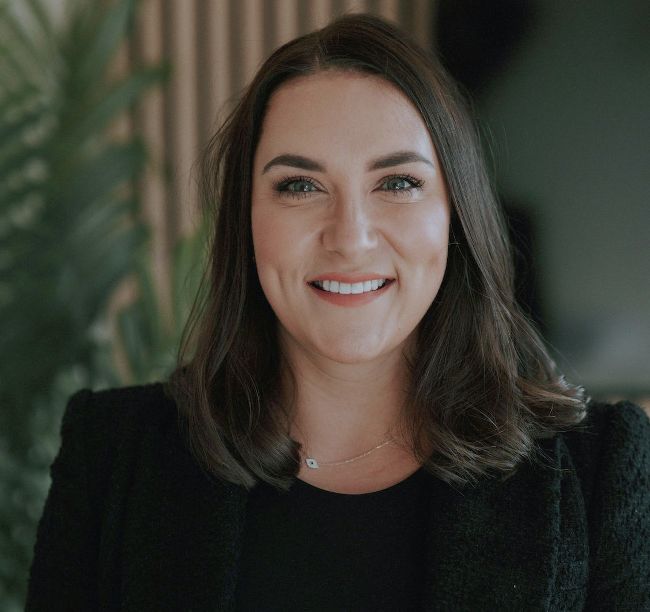
Amy Bird RGN NMP is an award-winning nurse prescriber, speaker, trainer and KOLwith more than a decade of full time experience in medical aesthetics. She is lead nurse at her practice, KAST Medical Aesthetics in Cheshire, and recently became chair of BAMAN. She is a passionate advocate for best practice, standards and patient safety.