
Patients often worry about post-surgical ‘slippage’ after a facelift or facial rejuvenation procedure. Dr Roberto Viel explores why tissue settles after surgery, how lift vectors affect long-term results, and the role of strategic maintenance in preserving facial rejuvenation.
People often describe changes after surgery as a facelift slipping, but medically this is not an accurate term. Facelifts do not physically slide down the face. What patients interpret as slipping is usually the natural settling phase that happens as swelling reduces and tissues relax. This is expected and part of the healing journey.
In the first few weeks, the face can appear overly lifted or tight. This is influenced by swelling and the temporary tension created during surgery. As the tissues heal, the result becomes softer and more natural. To someone unfamiliar with the healing process, this transition can look like the lift is reversing, but it is simply the face adjusting to its new position.
What can be done if a facelift starts to slip?
The first step is understanding why the change is happening. In most cases, it is normal postoperative settling, which can continue for three to 12 months. I always explain to patients that the early result is not the final result. The face needs time to remodel and integrate the repositioned tissues.
If there is a genuine early relapse, which is uncommon, the approach depends on the cause. Sometimes the issue is not laxity, but volume loss, and subtle injectable support can restore balance. In other cases, energy-based skin tightening or a more advanced skincare routine can help maintain the lift.
Surgical revision is rarely required. When it is considered, it should only be done once the tissues have fully stabilised. Operating too soon can compromise the outcome. Prevention is always the best strategy. Correct lift vectors, attention to deeper structures and restoring volume where needed are far more important than simply tightening the skin.
Why are lift vectors important?
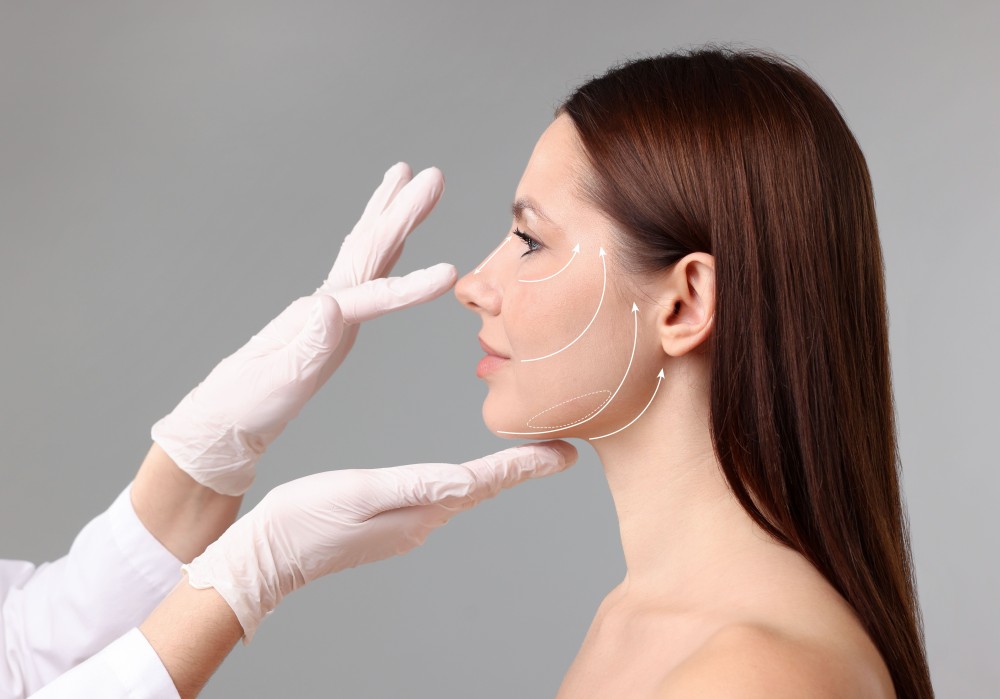
Facial ageing is not a simple downward movement. It is a three-dimensional process involving volume loss, ligament laxity and changes in the deeper fat compartments. If a facelift pulls the tissues backwards or sideways, the result can look unnatural and will not last.
A vertical or supervertical vector respects the natural direction of youthful facial support. It lifts the deeper tissues back to their original position rather than dragging them into a new one. When the underlying structure is repositioned correctly, the result is more natural and more durable.
What is the difference between an SMAS facelift and a deep plane facelift?
The SMAS, or Superficial Musculoaponeurotic System, is a key layer involved in facial ageing. In an SMAS facelift, we lift and reposition this layer to restore structure without relying on skin tension. It is a reliable and versatile technique that can achieve excellent and long-lasting results.
A deep-plane facelift works at a deeper level. It releases certain ligaments and lifts the midface more extensively. This can be particularly effective for patients with significant cheek descent or deep nasolabial folds.
However, the technique alone does not determine the outcome. A beautifully executed SMAS lift can outperform a poorly executed deep-plane lift. What matters most is the surgeon’s understanding of anatomy, the patient’s unique ageing pattern and the harmony between lifting, tightening and volumising.
Does a SMAS facelift or deep plane facelift last longer?
Neither technique necessarily lasts longer.
Longevity depends on tissue quality, genetics, lifestyle and how well the deeper structures are supported. A well-performed SMAS lift can last just as long as a deep plane lift. The key is addressing all components of ageing, not just the layer you choose to lift.
For example, if a patient has significant volume loss but only the SMAS is tightened, the result may look flat or hollow. If the deep plane is lifted but the neck is not addressed, the rejuvenation will feel incomplete. Facelift surgery is a combination of structural repositioning, volume restoration, and skin quality management. The technique is only one part of the overall strategy.
Do facelift results vary depending on the patient's age?
Yes. A facelift resets the clock, but it does not stop it. Patients continue to age, but from a more youthful starting point. The rate at which tissues relax again depends on collagen quality, elastin levels, bone structure, and lifestyle factors.
In patients over 60, the tissues are naturally less resilient. Ligaments are looser, collagen is reduced, and the skin has less elasticity. This means the longevity of the lift may be shorter compared to someone in their 40s or early 50s. This does not mean the results are not worthwhile. They are. It simply means expectations should be realistic and maintenance should be prioritised.
How effective are secondary facelifts?
Secondary facelifts are more complex. The anatomy has been altered, scar tissue may be present, and the tissues can be thinner or less elastic. This means the surgeon must be delicate and strategic.
It is also well recognised that second facelifts do not typically last as long as primary ones. The tissues have already been lifted once, and their structural integrity is different. That said, secondary facelifts can still deliver beautiful refinement and rejuvenation. They simply require a more tailored approach and a clear understanding of what can realistically be achieved.
How can patients maintain their facelift?
Maintenance is essential. Surgery repositions tissues, but it does not improve skin quality. That is where medical skincare, sun protection and antioxidants come in. High-quality vitamin A, C and E formulations support collagen, protect against free radicals and help maintain firmness.
Nonsurgical treatments can also play a role. Skin tightening devices, collagen-stimulating injectables and strategic volume restoration can extend the longevity of a facelift significantly. Think of surgery as the foundation. Skincare and maintenance treatments are the architecture that keeps the structure strong.
So, can a facelift really slip?
No. Not in the way people imagine. What they are seeing is the natural evolution of healing, the settling of tissues, or the continuation of the ageing process. A facelift is not a static event. It is a dynamic journey. With the right technique, realistic expectations and proper maintenance, the results can be both natural and long-lasting.
Dr Roberto Viel
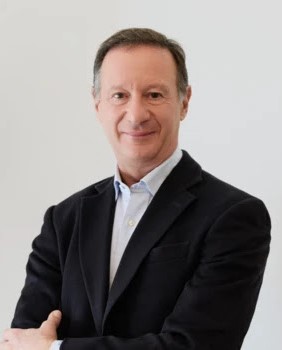
Dr Roberto Viel is an internationally recognised aesthetic plastic surgeon with more than 30 years of experience in advanced cosmetic surgery. Based between London, Dubai and Abu Dhabi, he is widely regarded as one of the pioneers of modern penoplasty and a leading figure in body contouring and facial rejuvenation.
He is a longstanding member of several major professional bodies, including the British Association of Cosmetic Surgeons, British College of Aesthetic Medicine (BCAM), the Emirates Plastic Surgery Society, and the International Academy of Cosmetic Surgery, reflecting his commitment to clinical excellence and ongoing medical advancement.