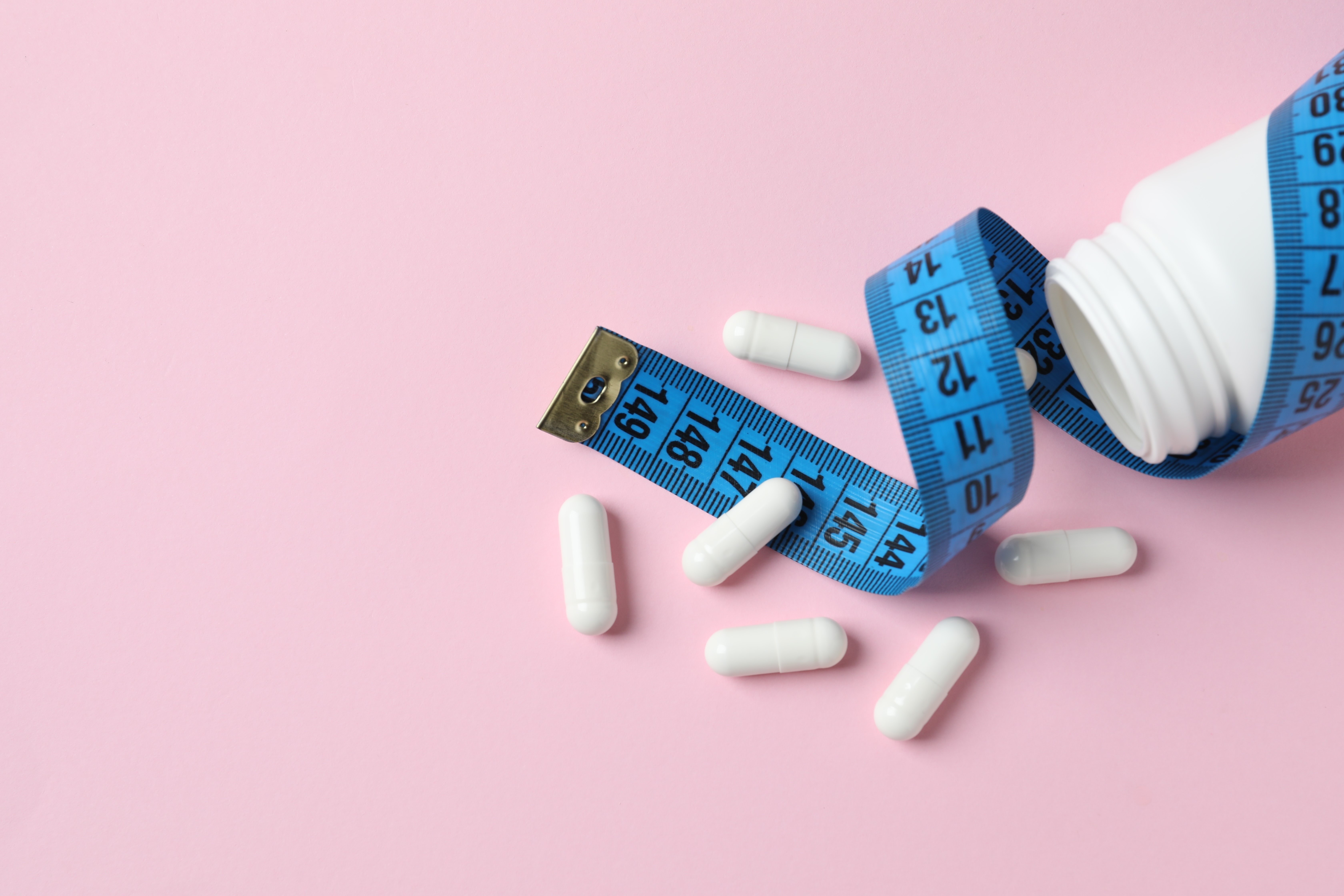
The Medicines and Healthcare Regulatory Agency (MHRA) has approved Eli Lilly’s orforglipron (Foundayo) for weight management in the UK.
This marks the UK as the first country in Europe to approve this GLP-1 tablet for weight management and type 2 diabetes, following the FDA approval in the US in April and MHRA approval for the semaglutide (Wegovy) tablet in June.
What does the new weight loss pill mean?
The new weight loss pill signifies continued advancement in GLP-1 and weight loss medications.
Unlike injectable GLP-1 medicines, orforglipron is taken once daily as a tablet, at any time of day and without food or water restrictions. Treatment starts at 0.8mg and is gradually increased through 2.5mg, 5.5mg, 9mg, 14.5 mg, and 17.2mg, with a minimum of one month at each dose level.
The pill is considered a more convenient alternative to the GLP-1 weight management injections, improving accessibility to the medication.
However, orforglipron should not be viewed as an aesthetic treatment. It is a prescription-only medicine (POM), and any discussion around its use should remain within the appropriate medical and prescribing framework.
How does the orforglipron weight loss pill work?
Orforglipron is a GLP-1 receptor agonist. The medication works by mimicking the action of the naturally occurring hormone, glucagon-like peptide (GLP-1), which is released by the body after eating.
The new medication, orforglipron acts on areas of the brain that regulate appetite, helping people feel fuller for longer, reducing hunger, and decreasing food cravings.
This therefore helps patients eat less, which supports weight reduction, in conjunction with recommended diet and lifestyle adjustments.
The MHRA states that the most common side effects include nausea, constipation, diarrhoea, vomiting, indigestion and abdominal pain.
Who will be eligible for orforglipron in the UK?
Orforglipron is authorised for weight loss in adults in the UK with a BMI of 30 or above, or a BMI of between 27 and 30, and at least one weight-related comorbidity.
When will the new weight loss pill, orforglipron be available in the UK?
Whilst the MHRA has approved the tablet for use in the UK, it is not currently available through the NHS.
Decisions on NHS use will follow established processes, including an evaluation by the National Institute for Health and Care Excellence (NICE).
All GLP-1 medicines are POMs, which means they can only be obtained from a registered pharmacy, with a prescription from a doctor. Buying GLP-1 medicines from unregulated sellers carries serious health risks.

What does the new GLP-1 pill mean for aesthetic practitioners?
The continued expansion of GLP-1 medicines could have implications for aesthetic practitioners as more patients undergo significant weight loss. Rapid or substantial weight reduction can cause changes in facial volume and skin laxity, potentially leading patients to seek aesthetic treatments.
For practitioners, this reinforces the importance of taking a detailed medical history and establishing whether a patient is currently using a GLP-1 medicine as part of their consultation.
Safety and regulation
Orforglipron is a POM, meaning it can only be legally obtained from a registered pharmacy with a prescription from an appropriate prescriber.
The MHRA says it will continue to monitor the medicine's safety and effectiveness following its authorisation.
“Following rigorous assessment of orforglipron’s safety, quality, and effectiveness, we are pleased to be the first regulator in Europe to authorise this tablet for weight management and type 2 diabetes,” shares Julian Beach, MHRA executive director of healthcare quality and access.
“As with all GLP-1 receptor agonists, this is a prescription-only medication, and the MHRA will keep the safety and effectiveness of orforglipron under close review.”
The regulator has also warned patients against purchasing GLP-1 medicines from unregulated suppliers, which can pose serious health risks. This is particularly relevant as demand for weight-loss medicines continues to grow and patients are targeted with unregulated medications.
Practitioners should also be aware that POMs such as orforglipron cannot be promoted directly to the public under UK medicines advertising rules.
Concerns surrounding counterfeit GLP-1 pills
Sobia Qasim, superintendent pharmacist at online pharmacy Curely, shared her concerns surrounding the impact the new GLP-1 could have on the counterfeit market.
"Having an oral option could make GLP-1 treatment feel much more accessible to people who are uncomfortable with needles or simply prefer taking medication as a tablet," she shares.
"But increased demand also creates an opportunity for illegal sellers. We've already seen counterfeit weight-loss injections circulating, and tablets could present a different challenge because people are much more accustomed to receiving pills through the post."
Sobia says the shift towards tablets could make it even more important for patients to check where their medication is coming from.
"A tablet may instinctively feel less suspicious than an injection because we're used to seeing medicines in bottles and blister packs.
Sobia shares her concerns surrounding how convincingly these products can be duped: "Counterfeiters can reproduce colours, logos, packaging and batch information extremely convincingly. The most important checks are around who prescribed the medicine and who supplied it."

Seven signs a weight-loss pill could be fake
Sobia says consumers should be particularly cautious if:
- It is being sold through social media messages
Prescription weight-loss medicines should not be bought through private messages, marketplace listings or informal social media accounts. -
There is no medical consultation
A regulated provider should assess your health, current medicines and eligibility before prescribing treatment. -
The seller guarantees a specific amount of weight loss
Individual results vary. Guaranteed outcomes should immediately raise questions about the provider. -
You are pressured to buy quickly
Countdown timers, "limited stock" claims and urgent payment requests can discourage people from checking whether a seller is legitimate. -
The price seems unusually cheap
A significantly lower price may indicate that a product is fake, unlicensed, incorrectly stored or illegally obtained. -
The tablets arrive loose or in unfamiliar packaging
Prescription medicines should arrive appropriately sealed and labelled with dosage and patient information. -
You cannot identify the registered pharmacy supplying it
Consumers should be able to establish which pharmacy is dispensing their medication and verify its registration with the appropriate UK regulator.
She also recommends checking that the provider requires a genuine clinical assessment, uses an appropriately qualified prescriber and dispenses medication through a registered UK pharmacy.